












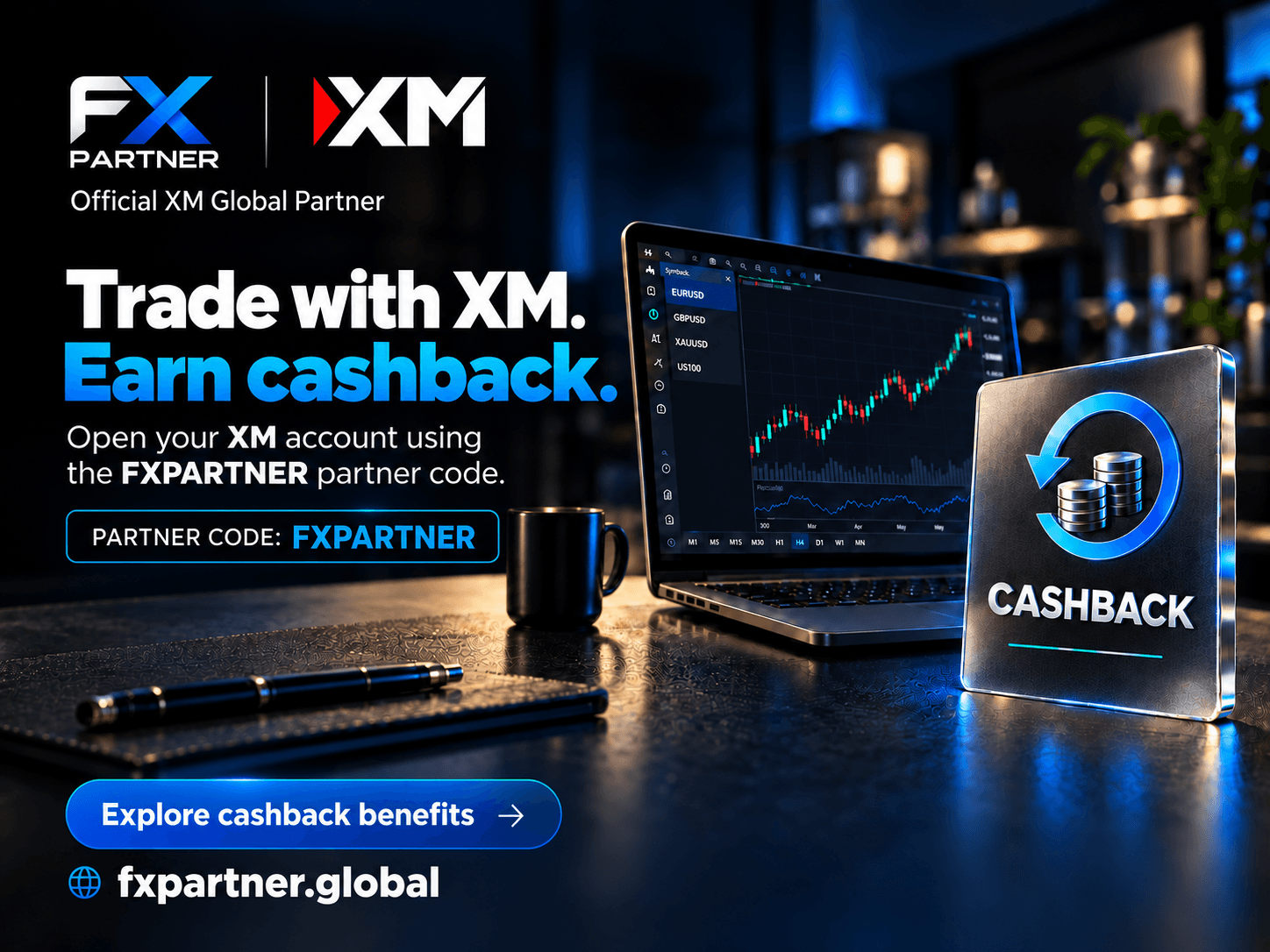
Consider two traders. At the same broker, on the same currency pair, on the same day, opening the exact same trades and closing them at the same levels. At the end of the year, one has more money in their account than the other.
The difference between them is not strategy. It is not analysis, timing, or luck. The difference is that one is receiving back a portion of the cost of every trade they make.
Every return item in your trading account depends on one single thing: being right in the market. Cash back is the only line item outside this list — it is paid on winning trades and losing trades alike. This article explains how it works, where the money comes from, and exactly what it changes in your account.
What is the source of this money? Nobody gives away free money
This is the right question, and one should not participate without knowing the answer.
A broker's revenue consists of the spread and commission you pay. The broker pays a portion of this revenue as a share to business partners who refer traders to them — this is the standard IB (introducing broker) model in the industry. FXPARTNER is an official business partner of XM and returns a portion of this share to the person actually making the trade, namely you.
The critical point here is this: cash back does not come from a cost added on top of your spread. The spread you pay is the same whether in an account opened with a partner code or without a code. The only thing that changes is that a portion of the partner share that the broker would pay anyway stays with you. In other words, a trader who opens an account without a code does not trade cheaper — they simply never claim a share that could belong to them.
We write this model explicitly because in every offer presented as "free money", the first question to be asked is the source of the money. An offer whose source cannot be explained is always riskier than an offer that can be explained.
In numbers: how much does your threshold decrease?
The clearest way to understand the impact of cash back is to see it not as profit, but as a reduction in threshold.
In an XM Standard account, the EUR/USD spread starts from 1,0 pips. Since 1 pip in 1 standard lot equals approximately 10 dollars, before earning a single dollar from that position, you must win back 10 dollars from the market. This is the invisible threshold you overcome in every trade.
Cashback directly pulls this threshold down. Whatever your rebate per lot is, your real cost is reduced by that much:
- –$2 rebate per lot → real cost $8 → threshold 0.8 pip instead of 1.0 pip.
- –$3 rebate per lot → real cost $7 → threshold 0.7 pip. The distance you need to cover is shortened by 30%.
- –$5 rebate per lot → real cost $5 → threshold 0.5 pip. Half of your cost is returned.
When converted to an annual table
A few dollars on a single trade sounds small. What makes cashback meaningful is repetition — on every lot, without exception.
A trader trading 20 lots a month means 240 lots a year:
- –$2 per lot → $480 per year.
- –$3 per lot → $720 per year.
- –$5 per lot → $1,200 per year.
- –If you trade 50 lots a month, multiply these figures by 2.5: between $1,200 and $3,000 a year.
Important warning: learn your own rate
The figures above are examples set up to demonstrate the mechanism, not a commitment. The cashback rate per lot varies depending on the account type, the instrument you trade, and your monthly volume — calculated via commission on Zero accounts, and via spread on Standard and Micro accounts, and these two do not yield the same figure.
You can find out the current rate corresponding to your profile on FXPARTNER's cashback page. Do not make annual planning without learning a rate; a budget built with an "approximate" figure is what creates the most disappointment when it doesn't materialize.
What "at the end of the day" means — and why it matters?
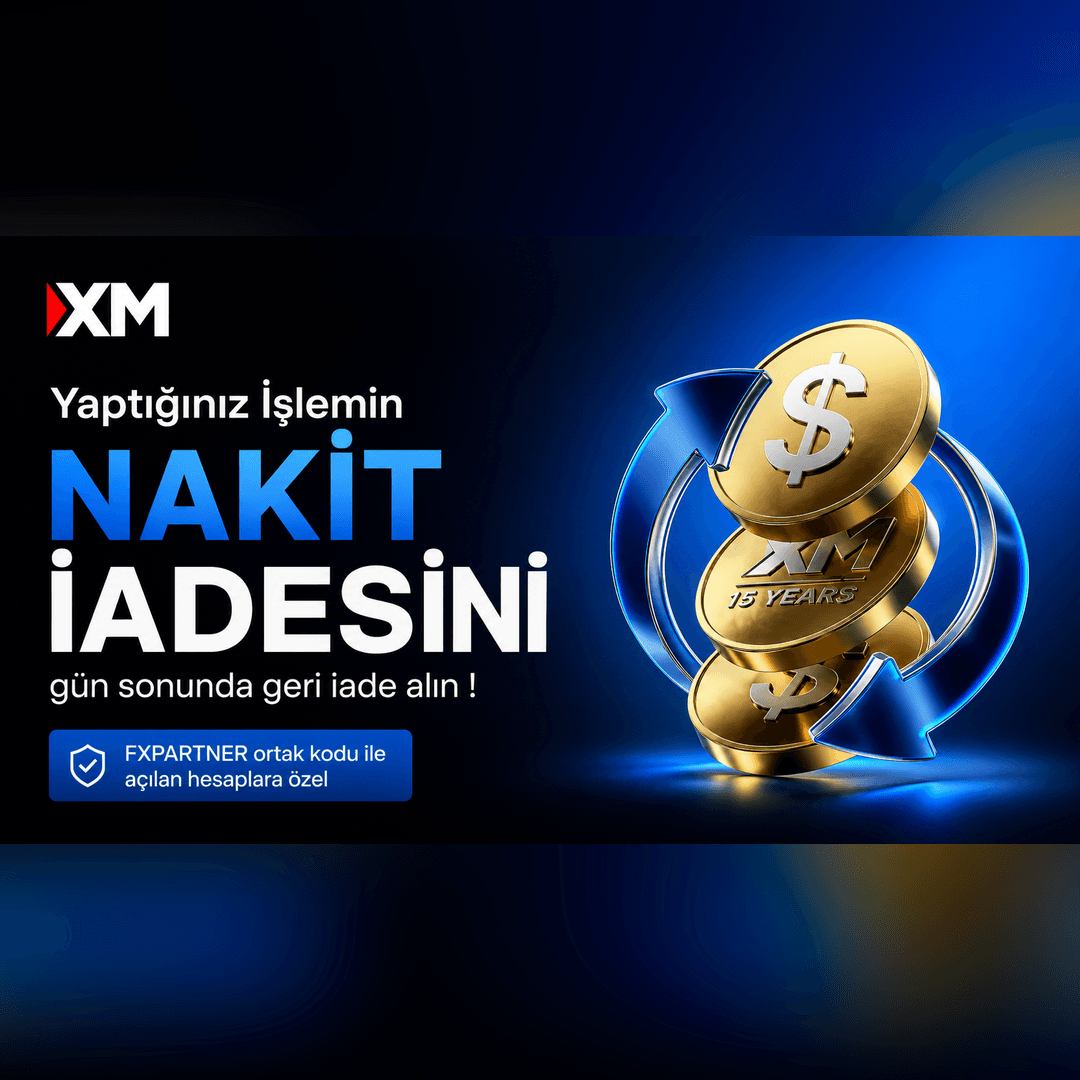
Most cashback programs pay monthly, and some quarterly. In the XM cashback campaign, the rebate returns to your account at the end of the day. This is not just a difference in speed; it has three distinct outcomes.
- –The money returns to your margin on the same day and starts working for you the next day. In a program that pays monthly, the same amount waits outside your control for an average of two weeks.
- –Your cost becomes visible. Seeing how much rebate you receive each day also means seeing how much cost you paid that day. A visible cost is a managed cost — this is how many traders start tracking their trading costs for the first time.
- –Verifiability. In daily payment, you notice a glitch the next day; in monthly payment, you find out about the same glitch thirty days later. Frequency is the most practical form of trust.
Switching cost: zero
What makes cashback unusual among financial decisions is that it asks for no compromises from you. You are not changing your broker — you are staying with XM anyway. You are not changing your strategy. You are not changing your platform, lot size, or risk rules.
If you already have an XM account, you do not need to close your existing account either: you open an additional account with the FXPARTNER partner code and continue your trades through that account.
- –1. Open an additional account at XM with the FXPARTNER partner code.
- –2. Continue your trading through this account — nothing changes in your habits.
- –3. The cashback for the trades you make starts hitting your account at the end of the day.
How much difference does it make, and for whom?
To be honest, cashback does not make the same amount of sense for everyone. Find your profile below:
- –Under 5 lots per month: annual cashback remains at the level of a few hundred dollars. It's not at a loss, but it won't change your life; at this volume, your main priority should be consistency, not cost.
- –20-50 lots per month: here the figure becomes noticeable. Annual cashback equals several times the monthly trading cost of most investors.
- –100 lots and above per month: cashback is no longer a detail, it is a line item on your income statement. Not receiving cashback at this volume is equivalent to knowingly accepting a performance loss in your strategy.
- –Scalper and EA users: the highest impact is here. In these styles, total cost is the dominant variable determining the strategy's profitability threshold; a 20-30% reduction in cost is large enough to pull some systems out of the loss zone.
What cashback does not do
The way to describe an offer honestly is to also state what it is not.
Cashback is not profit; it is a cost refund. If you received a $60 refund in a month where you lost $500, you lost $440 that month. The refund reduces the loss; it does not change the sign.
Cashback does not turn a losing strategy into a profitable one. In a system that loses an average of $5 per lot, a $3 refund per lot leaves you at a loss of $2 per lot — and as volume grows, this loss grows too.
Therefore, the most expensive mistake is this: opening more trades just to earn cashback. Accumulating lots when your strategy gives no signal is the fastest way to lose far more to the market than you will get back through cashback. Cashback is intended to reduce the cost of trades you will execute; not to make trades you would not otherwise make.
Finally: no broker is chosen simply because they offer cashback. Broker selection is made across four axes — regulation, cost, platform, and withdrawals. Because XM is already strong across these four axes, cashback turns into a meaningful additional advantage; at a weak broker, the same cashback would merely be an ornament placed on top of a bad decision.
Why XM?
Cashback is a multiplier; you need to look at what it builds upon.
XM Global holds four licenses, including ASIC (Australia), CySEC (Cyprus), and DFSA (Dubai) — three of which are tier-1 authorities. Tier-1 regulation mandates the segregation of client funds from company funds and a minimum capital reserve requirement. Minimum investment is $5, negative balance protection is available, no broker fees are charged on deposits and withdrawals, and withdrawal requests are typically processed within 24 hours.
In the FXPARTNER Index, XM's composite score is 9.5 — the highest score in our ranking, and a large portion of this comes from the regulation axis. Cashback is a cost advantage added on top of this foundation; it is not a substitute for it.
What has this campaign paid so far?
To date, more than $100,000 in cashback has been paid to investors trading at XM with the FXPARTNER partner code. This figure is not a projection, but the rounded sum of actual payments made.
You can find the full terms of the campaign, current rates, and application steps on our campaigns page. Once you create your cashback registration, your payments become trackable in your account.
Summary
No one can guarantee whether you will be right in the market. But you can know from the outset that a portion of the cost you pay on every trade will return to you — and this is the only certainty in your trading account.
There is nothing you need to change: same broker, same strategy, same trades. The only difference is which partner code the account was opened with. For someone trading 20 lots a month, this single-line difference means a few hundred dollars a year.
This content is for general information purposes only and is not investment advice. Leveraged trading involves high risk, and you may lose your entire capital. Cashback rates and campaign conditions are subject to change; verify the current terms before participating.
FXPARTNER bağlantısıyla XM hesabı açBest 5 brokers
 01
01XM Global
9.5IndexXM Global
- Min. deposit
- $5
- Leverage
- 1:1000*
 02
02Lite Finance
9.2IndexLite Finance
- Min. deposit
- $10
- Leverage
- 1:1000*
 03
03FxPro
9.1IndexFxPro
- Min. deposit
- $100
- Leverage
- 1:2000*
 04
04MultiBank Group
9.0IndexMultiBank Group
- Min. deposit
- $50
- Leverage
- 1:1000
 05
05AvaTrade
8.9IndexAvaTrade
- Min. deposit
- $100
- Leverage
- 1:400*
Sponsored links. Ranking is based on the FXPARTNER Index score, which consists of regulation, cost, platform, and withdrawal axes; affiliate revenue does not affect the ranking.